What Is ITAD (IT Asset Disposition)?
What ITAD Stands For
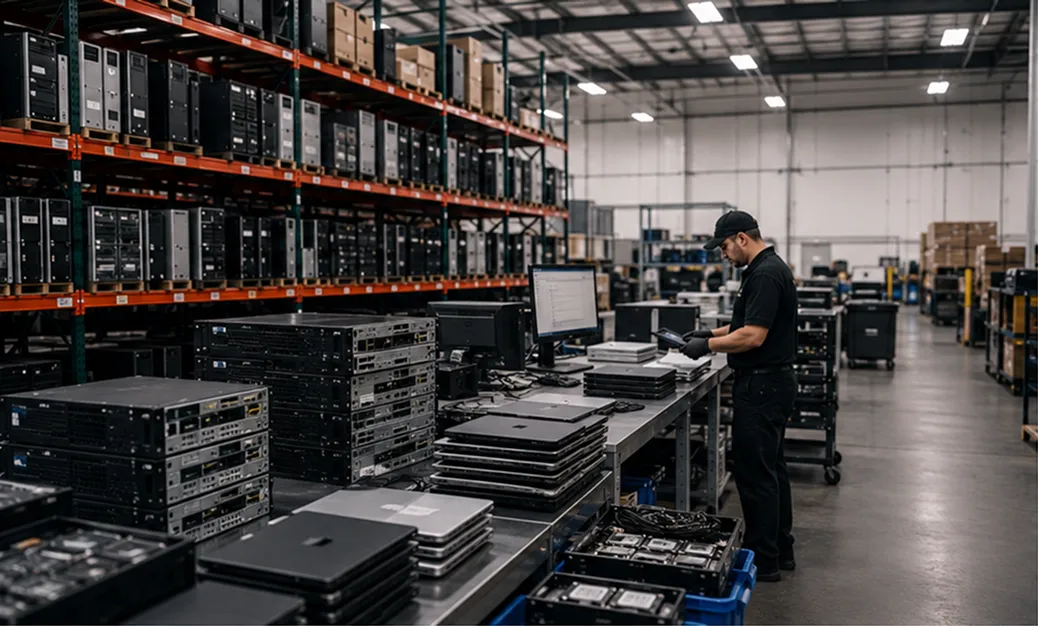
What does ITAD stand for? IT asset disposition, and the ITAD meaning in practice is the managed retirement of an organization's IT equipment. An ITAD program takes laptops, desktops, servers, storage, networking gear and mobile devices out of service, sanitizes every data-bearing device, sends each one to its best outcome (reuse, resale, parts recovery or recycling) and documents what happened to it. That is the difference from recycling: a recycler is concerned with materials, while ITAD is concerned with the data on each device, the value left in it, and a record that proves both were handled.
Where the IT Asset Disposition Definition Differs From Recycling and Data Destruction
The three terms are often used interchangeably, and they describe different jobs.
ITAD
- What it is for
- Retiring equipment with the data sanitized, value recovered and every outcome documented
- What happens to a working device
- Sanitized, tested, graded and routed to resale or reuse where it still has value
- What documentation it produces
- A per-device sanitization record, a chain-of-custody record, a disposition outcome per device and a settlement
Electronics recycling
- What it is for
- Recovering materials and keeping electronics out of landfill
- What happens to a working device
- Usually processed for materials, whether it works or not
- What documentation it produces
- Typically a record of what was received and processed
Data destruction
- What it is for
- Making the data on storage media unrecoverable
- What happens to a working device
- The drive is wiped or destroyed; what happens to the rest of the device is outside the service
- What documentation it produces
- A certificate of data destruction, ideally listing each drive by serial number
In other words, data destruction and recycling are stages inside ITAD rather than alternatives to it. The longer comparison is in ITAD vs. e-waste recycling.
What Happens in an ITAD Engagement
- Intake and inventory. The organization shares a list of models, quantities and known condition issues. A complete list is helpful but not always required to start.
- Valuation. The provider prices the lot, typically on fair market value minus processing and logistics, and makes one offer for the whole lot rather than for individual line items.
- Collection. Equipment is packed and collected on site, or shipped with prepaid labels for smaller lots. Chain of custody starts when the equipment is released.
- Sanitization. Every data-bearing device is sanitized to a recognized guideline such as NIST SP 800-88, with a record tied to its serial number. Media that cannot be sanitized is physically destroyed. This is the stage covered by secure data destruction.
- Test and grade. Each device is checked for function, cosmetic condition, battery health and account locks, which together set its value.
- Remarketing or recycling. Working equipment goes to resale or reuse, recoverable components are pulled from units that do not pass, and the remainder goes to certified recycling.
- Documentation. The records are compiled per device, so the paperwork lists serial numbers rather than pallet counts.
- Payment. Settlement is issued once processing is complete. Where a lot holds no resale value, the outcome is documented recycling.
For how this runs in practice, see IT Revalue's IT asset disposition services.
What ITAD Produces on Paper
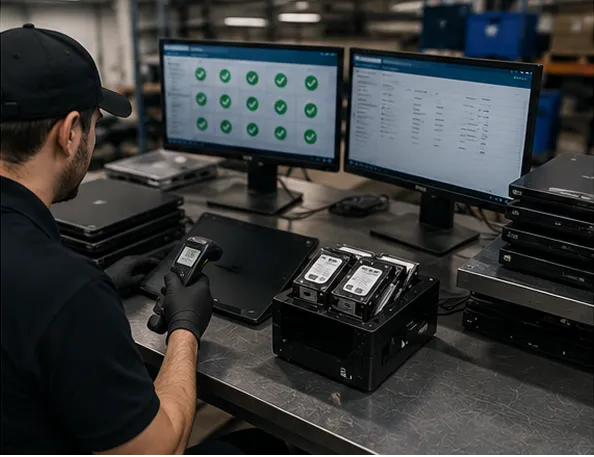
- The serialized erasure record. One record per device with its serial number, the sanitization method, the date and time, and a pass or fail result. It is what proves a specific device was sanitized.
- The certificate of data destruction. A certificate naming the device, the method, the date and the record identifier. It is what a compliance team files to close out the disposition and what an auditor asks to see.
- The chain-of-custody document. A record of every handoff from pickup to final disposition. It shows there was no point at which a device could have gone missing unnoticed.
- Fair market value. What the lot was worth, what was paid, and which devices were resold, recovered for parts or recycled. It is what finance uses to reconcile the asset register.
When to Use ITAD
- When you refresh devices: replacing a laptop or desktop fleet, or cycling student devices at the end of a school year.
- When you decommission a data center or server room: retiring servers, storage and networking equipment.
- When leased equipment reaches end of term: before you return it, or when you process returns as a lessor.
- When an office closes or consolidates: relocations and mergers that leave equipment with no home.
And whenever your data carries security obligations, as it often does in healthcare, finance, education and government, ITAD gives you the documented disposal record those rules expect.
What ITAD Costs, and How Value Recovery Offsets It
ITAD is not priced like a disposal fee. Most engagements include a buyback or another form of value recovery, so the equipment's fair market value is set against the cost of the work. Some services may carry a charge, but the final settlement usually does not leave the organization paying. At IT Revalue, logistics costs are folded into the buyback offer rather than billed separately.
When equipment is old, damaged, locked or otherwise unsellable, there may be little value to recover, and the outcome is documented recycling. The data handling and the records are the same either way. Some organizations also prefer not to sell outright: alongside the buyback model, IT Revalue offers ITAD as a service on a commission basis.
Frequently Asked Questions
What does ITAD stand for?
ITAD stands for IT asset disposition: the process of retiring business IT equipment so that the data on every device is sanitized, any remaining value is recovered through resale or reuse, and the outcome for each device is documented. It covers laptops, desktops, servers, storage, networking equipment and mobile devices.
Are ITAD and electronics recycling the same thing?
No. Electronics recycling recovers materials from equipment at the end of its life. ITAD is broader: it sanitizes the data on each device, routes working equipment to resale or reuse to recover value, and documents every device's outcome. Recycling is one possible outcome inside an ITAD program, used for equipment that cannot be reused.
What should an ITAD vendor be certified to?
Ask which recognized industry standard the facility that will process your equipment is certified to, such as RIOS, and confirm the certificate covers that specific location rather than only the corporate parent. NIST SP 800-88 is a sanitization guideline a vendor's process should align with, not a certification. An ITAD vendor checklist sets out the questions to ask.
Do small quantities of equipment qualify for ITAD?
Often, yes. ITAD is built for organizational lots rather than single devices. At IT Revalue, engagements tend to start around 50 units, but that is a proxy for lot value, not a hard cutoff. A single well-specced server can clear that bar on its own, and smaller lots are evaluated case by case.
How long does an ITAD engagement take?
It depends on lot size, logistics and the number of sites involved. At IT Revalue, a quote response comes back within one to two business days. After that, timing depends on logistics and lot complexity, and payment issues once processing is complete. Multi-site collections are coordinated under a single engagement.
Planning an IT Asset Disposition Project?
Submit your equipment list for a quote response within one to two business days. No obligation.