IT Asset Disposition vs. E-Waste Recycling: What's the Difference?
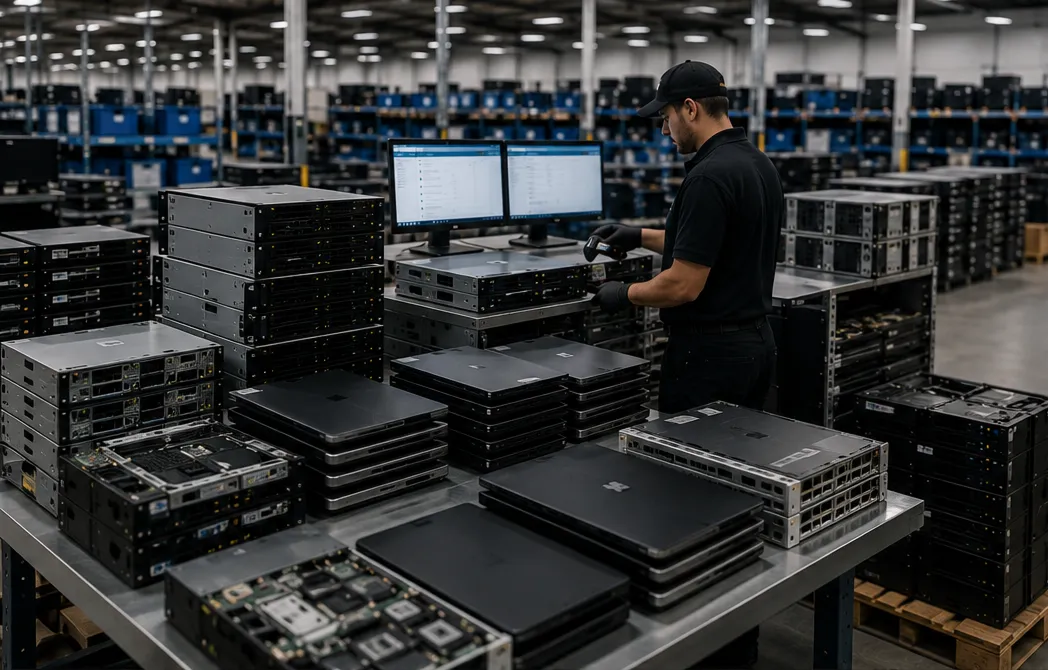
ITAD vs e-waste recycling is a question every organization faces the moment retired laptops, servers, or Chromebooks start piling up in a storage closet. The two terms, along with electronics recycling, get used interchangeably, and here is the key point up front: ITAD is not the opposite of e-waste recycling, it builds on it. IT asset disposition (ITAD) is essentially e-waste recycling plus everything that should happen before a device is ever broken down, so the simplest way to think about it is that ITAD is an easy way to build on top of ordinary recycling. E-waste and electronics recycling break equipment down for raw materials. ITAD manages the entire lifecycle of a device, including data security, value recovery, and regulatory compliance, and only recycles what is genuinely at the end of its life. It is a whole process that not only recycles what needs recycling but also salvages what is still reusable and captures the value that would otherwise be shredded. Understanding which approach fits your organization affects your data protection regulations exposure, your disposal costs, and how much residual value you recover from equipment you already paid for.
What Is IT Asset Disposition (ITAD)?
IT asset disposition is the structured process of securely and responsibly retiring, recycling, or repurposing outdated IT equipment. It covers everything from equipment collection and secure data destruction to testing, grading, and remarketing, with electronics recycling reserved for devices that have no further use. The goal is to manage the full lifecycle of an IT asset, not just its final disposal.
IT Revalue, PN California's dedicated ITAD brand, tests, grades, and sorts every device that comes through the door. That process determines whether equipment can be reused and resold to recover value, or whether it should move into electronics recycling for material recovery. Either way, sensitive data is destroyed first, with a documented chain of custody covering the device from collection through final disposition.
Because ITAD addresses regulated data, financial data, and other sensitive information before anything else happens, it supports compliance with data protection regulations in a way that general electronics recycling was never designed to do. Our FAQ page covers more detail on how the process works end to end.
What Is E-Waste Recycling?
E-waste recycling, sometimes called electronic waste recycling, is the process of breaking down discarded electronic devices to recover raw materials such as metals, plastics, and glass. The recycling process typically involves shredding, sorting, and smelting to extract valuable materials for reuse in manufacturing, reducing the need to mine new natural resources.
E-waste recyclers generally accept electronic devices at the end of their working life and process them for material recovery. Data security is not usually the starting point. Many e-waste recyclers destroy devices physically before any data-specific handling occurs, which works for equipment that never held sensitive information but creates risk for equipment that did.
This distinction matters because "e-waste" as a category includes both viable equipment that could be resold and devices that are genuinely beyond repair. Treating all of it the same way means giving up recovered value that a more structured process would have captured.
Key Differences Between ITAD and E-Waste Recycling
Both ITAD and e-waste recycling keep discarded electronics out of landfills, but the entire process diverges from the first step. Here is how the two approaches compare across the areas that matter most to organizations retiring IT equipment.
Scope of Service
E-waste recycling focuses narrowly on material recovery: breaking devices down and extracting metals, plastics, and other components. ITAD covers a wider scope that includes equipment collection, data destruction, testing, grading, remarketing, and only then recycling for anything that cannot be reused. ITAD treats disposal as the last step in the process, not the only one.
Data Security and Chain of Custody
Data security is the clearest dividing line between the two. ITAD providers build secure data destruction and a documented chain of custody into every transaction, backed by certifications that verify the process, so organizations retiring servers, laptops, or storage drives have verifiable proof that sensitive data was destroyed. E-waste recyclers are not always equipped for this, which leaves government agencies, healthcare organizations, and any business handling regulated data exposed to unnecessary risk.
Value Recovery
E-waste recycling assumes a device has reached the end of its usable life. ITAD assumes otherwise until testing proves it wrong. That difference in assumption is where recovered value comes from: equipment that still has market demand in secondary markets gets resold instead of shredded, offsetting the initial investment an organization made in that equipment years earlier. You can get a quote to see what your retired equipment is worth before deciding how to move forward.
The table below summarizes how the two approaches compare across the factors organizations weigh most heavily when retiring IT equipment.
| Factor | IT Asset Disposition (ITAD) | E-Waste Recycling |
|---|---|---|
| Primary Focus | Full lifecycle management | Material recovery |
| Data Destruction | Certified, with chain of custody | Not always included |
| Value Recovery | Tests and remarkets viable equipment | Typically none |
| Compliance Support | Documented for regulatory audits | Limited or unavailable |
| Best Fit For | Regulated data, enterprise IT, government | Non-sensitive, end-of-life devices only |
Why Data Security Sets ITAD Apart
Retired IT equipment often still holds sensitive information long after it leaves an organization's control. Hard drives, servers, and even Chromebooks can retain financial data, employee records, or customer information unless that data is properly destroyed before the device changes hands. This is the single biggest reason organizations choose certified data destruction over standard electronic waste recycling.
IT Revalue uses specialized device auditing software to wipe every device, then archives the erasure record in a secure database. That record becomes the documented chain of custody an organization can point to if a regulator, auditor, or customer asks how retired equipment was handled. Certificates of data destruction are available on request, giving IT and compliance teams a paper trail that generic e-waste disposal simply does not produce.
Pro Tip: Ask any recycler or ITAD provider for their chain of custody documentation before you sign a contract, not after equipment leaves your building. If they cannot produce it in writing, that is your answer.
Data breaches tied to improperly wiped equipment are entirely preventable, but only if the disposition process treats data destruction as a required step rather than an afterthought.
Equipment Types Handled Through ITAD
Not every device retires the same way, and a proper ITAD process accounts for the differences between equipment types rather than treating a server the same way it treats a Chromebook.
Laptops, Desktops, and Chromebooks
These make up the bulk of most retirement projects, whether it is a corporate laptop refresh or a school district's end-of-cycle Chromebook turnover. Each device is tested, graded, and sorted to determine whether it can be resold or should move into electronics recycling for material recovery.
Servers and Data Center Equipment
Data center decommissions involve higher stakes and larger volumes. Servers, networking equipment, and storage arrays often hold the most sensitive information an organization has, which makes documented chain of custody and certified data destruction non-negotiable rather than optional.
Components and Peripherals
GPUs, RAM, drives, and other component parts carry recoverable value even when the systems they came from do not. Sorting components separately from full systems allows more of that value to be recovered instead of lost to blanket electronic waste recycling.
Environmental Impact of ITAD and E-Waste Recycling
Both approaches aim to keep electronic devices out of landfills, but ITAD's emphasis on reuse before recycling gives it a measurably lighter environmental footprint. Extending a device's usable life through resale avoids the energy and raw materials required to manufacture a replacement, while electronics recycling alone only recovers materials after that manufacturing energy has already been spent.
The scale of the problem makes this distinction matter more each year. According to the UN's Global E-waste Monitor 2024, the world generated roughly 62 million tonnes of e-waste in 2022, and less than a quarter of it was documented as properly collected and recycled. Every device an ITAD provider successfully tests and resells instead of shredding is one fewer contribution to that gap, and one less demand on natural resources that would otherwise go toward manufacturing a replacement.
Responsible recycling still plays an important role for equipment that truly cannot be reused. Our environmental commitment covers how that hierarchy works in practice. The goal is minimizing environmental impact at every stage, not choosing one method and ignoring the other.
When to Choose ITAD vs. E-Waste Recycling
The right choice depends on what the equipment is, what data it held, and what your organization needs to prove afterward. Consider these factors when deciding between the two:
- Equipment held sensitive or regulated data: Choose ITAD for certified data destruction and a documented chain of custody.
- Equipment is still functional or in demand: Choose ITAD so it can be tested, graded, and resold instead of shredded.
- You need compliance documentation: Choose ITAD providers who supply certificates of data destruction and audit-ready records.
- Devices are genuinely non-functional and never held data: Standard e-waste recycling may be sufficient.
- You are decommissioning a data center or enterprise fleet: Choose enterprise ITAD for volume handling, logistics coordination, and value recovery across mixed equipment types.
For most organizations retiring business or government IT equipment, the presence of sensitive data alone is reason enough to choose ITAD over general electronic waste recycling.
Quick Reference: Match Your Situation to the Right Approach
Use this guide to match your retirement scenario to the right disposition path.
- Refreshing a corporate laptop or desktop fleet: ITAD, for data destruction and value recovery.
- Decommissioning a data center: ITAD, for documented chain of custody at scale.
- K-12 or university device turnover: ITAD, for certified wiping of student and staff data.
- Disposing of non-functional equipment with no data history: E-waste recycling may cover this need.
- Recovering value from off-lease or surplus equipment: ITAD, for testing, grading, and remarketing.
Conclusion
ITAD vs e-waste recycling ultimately comes down to what happens before disposal, not just what happens to the materials afterward. E-waste recycling recovers raw materials from devices that have reached the end of the line. IT asset disposition manages the full lifecycle, from secure data destruction through testing and value recovery, with recycling reserved as the last step rather than the only one.
IT Revalue, PN California's dedicated ITAD brand, handles laptops, Chromebooks, desktops, servers, and component parts through this full lifecycle process, backed by a documented chain of custody and certificates of data destruction available on request. If your organization is retiring IT equipment and needs to know where your data and your recoverable value are going, reach out with your equipment list to schedule a collection.
Request a Buyback Quote
Submit your equipment list to receive a buyback offer within one to two business days. No obligation.