Chain of Custody in ITAD: What to Ask Your Vendor
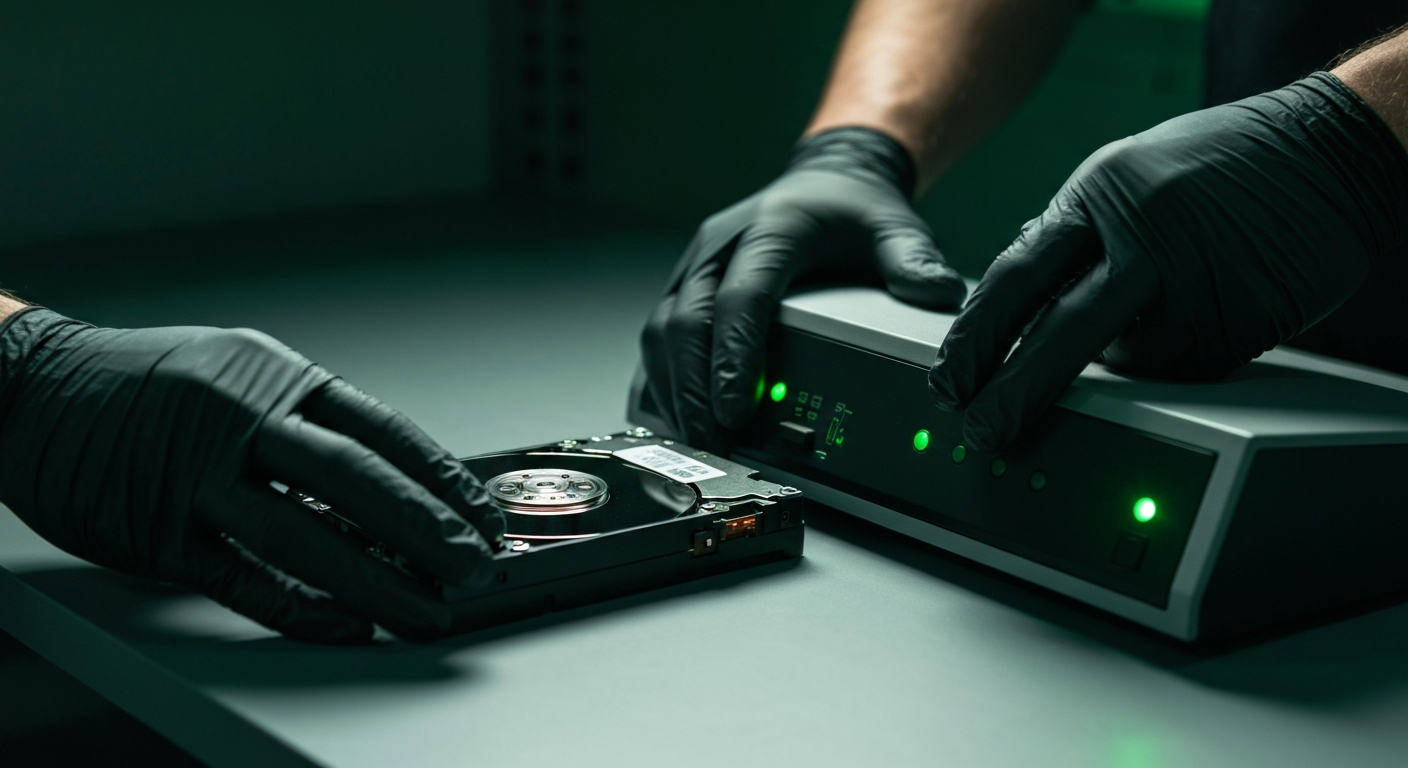
Every device that leaves your building carries sensitive data with it, whether that is customer records, financial information, or protected health information stored on a drive nobody remembers to check. Chain of custody ITAD practices exist to answer one question with certainty: where is that data, and who has touched it, at every point between your office and final destruction. A recent industry review of electronics recycling incidents found that most reported data breaches tied to retired IT equipment trace back to a gap in tracking, not a technical failure in the wiping software itself. That distinction matters. You can have the most advanced data erasure tool available and still face a breach if the device carrying unerased data was never accounted for between pickup and processing.
Most organizations only think about chain of custody after something has gone wrong, either their own incident or one reported about a peer organization. By then, the questions that would have prevented the problem are harder to ask, because the equipment is already gone. Building chain of custody questions into your ITAD provider selection process, before the first shipment leaves your dock, is the more reliable approach.
This guide walks through what chain of custody actually means in an ITAD context, the stages a reliable chain should include, and the specific questions to bring to your next vendor conversation.
What Chain of Custody Means in ITAD
Chain of custody refers to the unbroken, documented record of an asset's location, condition, and handling from the moment it leaves your facility to its final outcome, whether that is resale, refurbishment, or physical destruction. In asset disposition ITAD work, this record has to answer three things: who had the device, when, and what happened to it while they did.
A documented chain is not a single form signed at pickup. It is a continuous thread of custody documentation, serial numbers, and timestamps that follows each unit through every hand-off. When that thread breaks, even briefly, you lose the ability to prove what happened to the data on that device. For organizations managing regulated data such as health records or financial account details, that gap is not just a paperwork problem. It is a compliance exposure.
A well-documented asset lifecycle also supports value recovery, since equipment that is tracked accurately from collection through grading is easier to route toward resale or refurbishment rather than automatic recycling. The same records that protect you during an audit also help your vendor account for every unit when it comes time to report back on outcomes.
Key Stages of a Secure Chain of Custody
A strong chain of custody is built stage by stage, not assembled after the fact. Each stage should produce its own record, and each record should tie back to the specific IT assets involved.
Asset Identification and Tagging
Before anything leaves your site, each unit should be logged individually, typically by serial numbers or asset tags already in your inventory system, or by new asset tags applied on-site. This step is what makes accurate tracking possible later. Without individual identification, a pallet of laptops is just a pallet. With it, every device has a record that can be checked against your original count during inventory reconciliation.
Secure Pickup and Transport
Transport is where many gaps start. A secure pickup means the vendor documents transport details, including vehicle information, seal numbers if applicable, and the time the shipment left your facility. Some vendors support RFID tracking or GPS logging during transit, which adds another layer of asset tracking between collection and arrival at the processing facility.
Storage in a Controlled Environment
Once assets arrive, they should move directly into a controlled environment, meaning a secured, access-logged space rather than an open dock or general warehouse floor. Storage protocols at this stage should specify who can access the equipment and how long it sits before processing begins. Retired equipment that lingers in an unsecured area is a common point of asset loss, even at reputable facilities.
Final Destruction and Reporting
The last stage is where data sanitization or physical destruction occurs, followed by final reporting that documents the method used, the date, and the outcome for each serialized unit. This is also where verifiable proof should be generated, typically as a certificate tied to the specific devices processed, not a generic statement covering the batch as a whole.
Documentation and Audit Trails You Should Expect
Proper documentation is what turns a chain of custody from a process into evidence. If your organization is ever subject to an audit, whether from a regulator, an insurer, or an internal compliance team, this is the paperwork you will need to produce. Audit trails should be specific enough to answer questions about a single device months or years after it was processed, not just questions about a shipment as a whole.
Documentation quality varies widely across the industry. Some vendors provide a single certificate at the end of the ITAD process covering the shipment as a whole. Others generate a verifiable trail for every serialized unit, from the moment it is logged at pickup through the moment it is destroyed or resold. The second approach is what supports audit purposes if a specific device is ever called into question.
The table below breaks down what audit-ready reporting typically includes at each stage of the process.
| Stage | Documentation Produced | Why It Matters |
|---|---|---|
| Pickup | Signed manifest, asset count, transport details | Confirms what left your facility and when |
| Transit | Tracking log, vehicle or seal information | Closes the gap between departure and arrival |
| Storage | Access logs, intake confirmation | Establishes custody once assets reach the facility |
| Destruction | Serialized destruction log, certificate | Provides audit evidence tied to individual devices |
A vendor that can produce this level of detail on request, not just a summary certificate, is demonstrating that their ITAD chain of custody process is built for scrutiny rather than convenience.
Questions to Ask Your ITAD Vendor
The right questions surface how a vendor actually operates, not just what their marketing materials claim. Group your questions by the part of the disposition process you are most concerned about.
Security and Handling
Ask how the vendor tracks assets between your dock and their facility, and whether that tracking survives a shift change or a subcontracted transport leg. Ask directly whether assets leave your custody in a locked, dedicated vehicle or are consolidated with other clients' equipment in transit.
Data Destruction Methods
Ask what security measures govern the equipment while it waits to be processed, and how long that wait typically runs. Ask whether secure data destruction is performed on-site at their facility or subcontracted to a third party, since every additional hand-off is another point where the chain can break.
Documentation and Reporting
Ask whether reporting is provided per serial numbers or only as an aggregate count for the shipment. Ask how quickly you can request records if a specific device needs to be traced after the fact, and whether that documentation would hold up as audit evidence in a regulatory review.
Vendor Credentials and Standards
Ask which certifications govern their storage protocols and IT asset disposition process, and how long those certifications have been in place. IT Revalue is PN California's dedicated ITAD brand, and the R2v3 and RIOS certifications behind our process reflect more than two decades of PN California's operating history in electronics recycling and secure data handling.
What Happens When the Chain of Custody Breaks
An insecure chain does not always announce itself right away. A device that goes unaccounted for during transport, or sits unlogged in storage for a few extra days, might never surface as a problem, until it does. When it does, the consequences tend to fall into two categories: regulatory penalties for organizations handling regulated data, and client confidence damage that outlasts the fine.
Compliance failures tied to ITAD are rarely about a vendor destroying data incorrectly. More often, they trace back to a device that was never confirmed as received, processed, or destroyed at all. A missing unit in an inventory reconciliation report, a gap between the pickup manifest and the intake log, or a shipment that arrived a day late with no explanation are all small signals that point to a larger problem in how the vendor manages asset handling day to day.
That is why internal reviews of your vendor's process, not just their certifications, matter before you sign a contract. Certifications confirm that a vendor's systems are capable of meeting industry standards. They do not confirm that those systems are followed consistently on every shipment, which is why the specific questions you ask still carry weight.
Pro Tip: Ask your vendor for a sample chain of custody report before your first shipment, not after. If they cannot produce one on request, that is your answer about how secure their process really is.
Quick Reference: Match Your Concern to the Right Question
Use this guide to connect what you are worried about to the question that actually gets you an answer.
- Worried about data leaving your control: Ask how assets reach the facility and who has access during transport.
- Worried about audit readiness: Ask whether reporting is available by individual serial numbers.
- Worried about subcontracted handling: Ask whether secure data destruction happens on-site or is passed to a third party.
- Worried about proof after the fact: Ask how quickly a documented record for a specific device can be retrieved.
- Worried about certifications being current: Ask which standards apply and how long they have been maintained.
Chain of Custody Is a Question, Not an Assumption
A secure chain of custody is not just a compliance requirement to check off before a contract is signed. It is the mechanism that lets you prove, months or years later, exactly what happened to every device and every piece of data it carried. Chain of custody ITAD practices only work if they are documented at every stage, from asset identification through final disposition, and if your vendor can produce that documentation without hesitation.
Before you schedule your next equipment collection, ask the questions above and expect specific answers, not general reassurance. If you are ready to see how a documented process works in practice, request a quote or schedule a pickup and ask for a sample chain of custody report as part of the conversation. You can also review our data security and chain of custody practices in full before you decide.
Request a Buyback Quote
Submit your equipment list to receive a buyback offer within one to two business days. No obligation.